Healing that honors where we come from
Brainspotting: a brain-body approach to healing, developed by Dr. David Grand in 2003 and now practiced by therapists around the world.
Healing has never belonged only to the individual
Across Africa, healing has lived for generations within families, communities, faith, storytelling, movement, relationship and connection to the body.
Long before modern psychology developed language for trauma, African communities understood that what happens to us can live deeply within us, and that healing often requires more than words.
Brainspotting offers another pathway into that healing.
Where you look affects how you feel
Brainspotting works with a simple observation: where a person's eyes rest can connect to where an experience is held in the brain and body.
In a session, the practitioner helps the client notice something that is activated, often a feeling in the body, and then finds an eye position, a “brainspot”, where that activation is strongest or where the client feels most grounded. Holding that gaze while the practitioner stays closely attuned allows the deeper brain to process what it has been holding.
Brainspotting was discovered by David Grand, PhD, in 2003. It draws on neuroscience, somatic and body-based therapy and relational attunement, and it is used for trauma, grief, anxiety, performance, physical symptoms and much more.
What is Brainspotting?
A short introduction to Brainspotting as a neuro-experiential model, from GroundingHearts.
The video loads from YouTube when you press play. Watch on YouTube (opens in a new tab)
What a session looks like
Every session follows the client; this is the usual shape.
Notice
The client brings an issue to mind and notices what happens in the body, and how strong it feels.
Find the spot
Using a pointer or simply their own gaze, the practitioner and client find the eye position that connects most strongly.
Stay with it
The client holds that spot and lets whatever arises come and go, often quietly, while the practitioner stays present and attuned rather than steering.
Settle
The session closes with time to come back, notice what has shifted and ground before leaving.
Africa is not one people, culture or story
It is a vast continent rich in languages, traditions, histories, wisdom and ways of understanding healing.
At Healing Roots Africa Brainspotting Network, we are creating relational offerings and opportunities for African professionals to learn Brainspotting, experience it through their own cultural lenses, and help shape how it develops within the communities they serve.
The African practitioner is a partner, cultural wisdom-holder, clinician, leader and essential voice in the future of Brainspotting.
Rooted in relationship
Brainspotting emphasizes Dual Attunement: deep attention to both the person and their brain-body process. This relational foundation resonates with a truth deeply rooted in many African communities: we are shaped, strengthened and healed in relationship.
Healing Roots extends that principle beyond the therapy room. We are building a network where African professionals can learn together, consult, conduct research, develop leadership, mentor others and contribute their knowledge to the global Brainspotting community.
Rooted here. Growing from here.
We respect that Africa already holds extraordinary wisdom, resilience, scholarship, spirituality, creativity and traditions of communal care. Brainspotting is another tool. Our vision is to grow Brainspotting within Africa, with African professionals helping to shape its future.
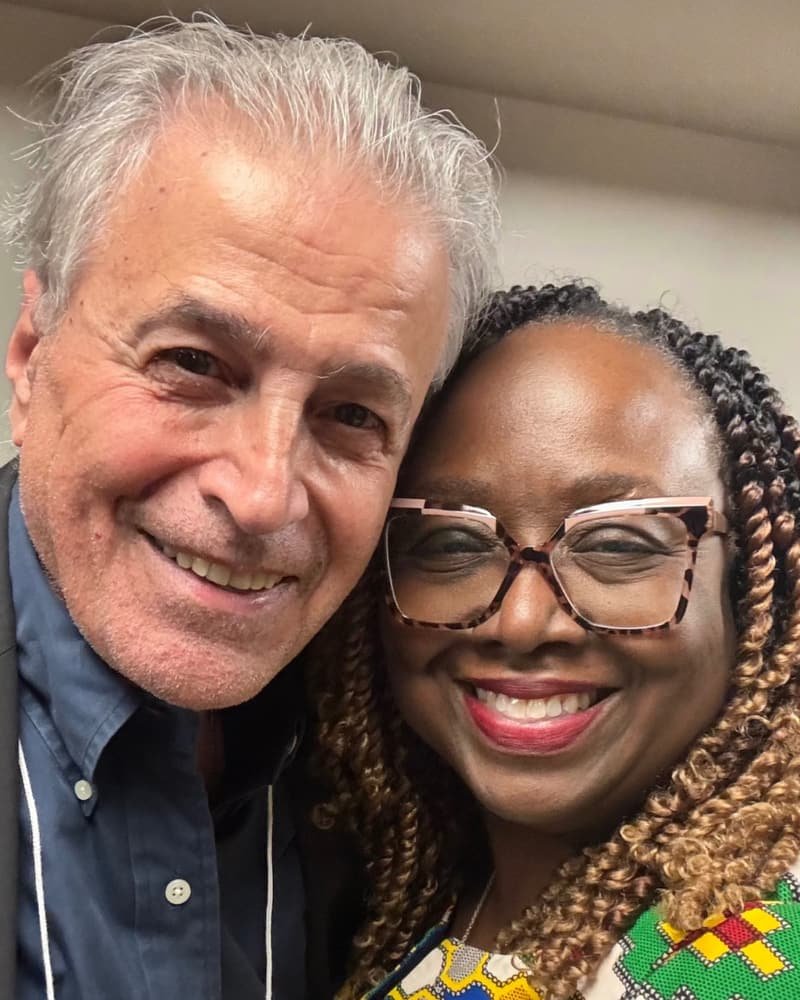
“You will take Brainspotting to Senegal, and Senegal will make Brainspotting what it needs it to be.”
Africa will make Brainspotting what it needs it to be
Dr. Grand offered those words as we prepared to bring our first Brainspotting Phase 1 training to Senegal in 2022. Today we hear them as a vision extending far beyond Senegal.
Our role is not to arrive with all the answers. We offer the principles, practices and possibilities of Brainspotting, and we honor and trust the wisdom, culture, lived experiences, traditions and ways of knowing already present within African communities.
As Brainspotting grows across the continent, practitioners in Ethiopia, Senegal, Kenya, Ghana, Togo, The Gambia and beyond will encounter it through their own cultural lenses. They will bring their understanding of family, community, spirituality, the body, trauma, resilience, relationship and healing into the work. And they will teach us.
We envision African practitioners as clinicians, teachers, researchers, consultants, innovators and future Brainspotting trainers who contribute to the global Brainspotting community. We are creating space for Africa to shape Brainspotting, and for the rest of the Brainspotting world to learn from what emerges.
Who can train
Brainspotting training is for qualified mental health and helping professionals: psychologists, therapists, counselors, social workers, psychiatrists, psychiatric nurses and others who provide therapeutic care. Some trainings also accept students in supervised clinical training.
Each training listing states who is eligible. If you are not sure whether your qualification fits, ask us before you register and we will help.
Common questions
Is Brainspotting the same as EMDR?
No. Both use the eyes, but they work differently. EMDR uses bilateral eye movements and a set protocol. Brainspotting uses a fixed eye position and follows the client's own process, with the practitioner attuned rather than directing. Many practitioners are trained in both.
Do I need to be licensed to train?
You need to be a qualified mental health or helping professional, or in supervised clinical training. Licensing systems differ across African countries, so we look at your qualification and role. Ask us if you are unsure.
Can I train online?
Yes. Phase 1 and Phase 2 are offered online as well as in person. Online trainings include live practice in small groups, so you will need a stable connection, a camera and a quiet space.
What happens after Phase 1?
You can start using Brainspotting with clients straight away. Consultation helps you build skill and confidence, and Phase 2 deepens the work. See consultation and trainings.
Can my clients use this site to find a therapist?
This site is for professionals. To find a trained Brainspotting practitioner, use the directory at brainspotting.com (opens in a new tab).
Questions about training or consultation?
Write to us and we will reply by email. You can also share Healing Roots with colleagues on WhatsApp.